

Project type
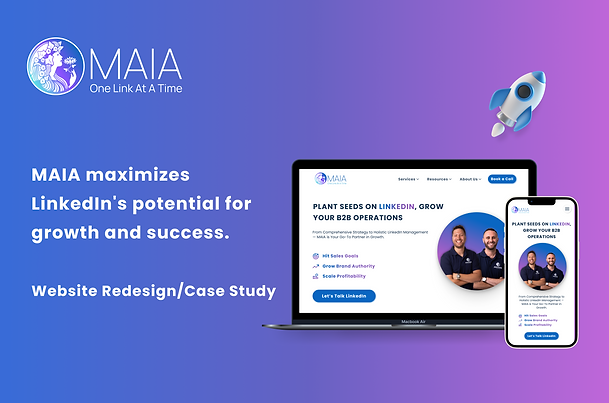
Website Redesign/Case Study
Date
UI/UX Designer- Sally Shengelia
Graphic Designer- Nir Levi
Front-end Developer- Gilad Efrati
Team Members
September 2023
Tools Used
Still in development
Figma
Adobe Phototshop
Adobe Illustrator

-
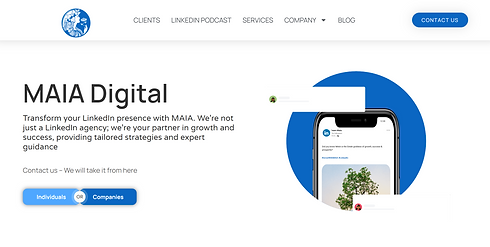
Outdated Design and Content: The LinkedIn agency website faces usability challenges due to an outdated design and content.
-
Single-Page Structure Issues: The single-page layout, coupled with unclear and outdated information, hampers the user experience and risks client loss.
-
Limited Information: Insufficient information makes it difficult for potential clients to understand the full extent of the agency's services.
-
Credibility Concerns: Outdated content negatively impacts the agency's credibility.
-
Navigation Complexity: The lack of clear navigation in the single-page layout complicates users' efforts to find specific services or information.
-
Engagement Shortfall: The current design fails to effectively engage users, hindering the showcasing of the agency's expertise and establishing trust.


-
Comprehensive Redesign: We propose a thorough redesign of the LinkedIn agency website, focusing on a clear, visually appealing, and user-friendly design.
-
Dedicated Pages for Services: Our solution includes adding new pages for each specific service, along with sections for podcasts, e-books, blogs, and more.
-
Improved Organization: This enhancement allows for a more organized presentation of the agency's offerings, ensuring potential clients readily understand the full scope of services.
-
Clear and Structured Information: Each service page follows a clear and structured format, providing comprehensive information about the specifics of that service.
-
Cohesive and Intuitive: The redesigned website features a cohesive and intuitive structure, enhancing user navigation and engagement while conveying the agency's professionalism and expertise.


-
No Design System: Lack of an established design system hampers design consistency.
-
Lone Designer Restrictions: Relying on a single UI/UX designer may lead to some limitations.
-
Time Constraints: Tight time frames limit in-depth research and testing.
-
Prioritize User Needs: Despite limitations, prioritize key user needs for a cohesive and efficient design.
-
Burnout Risk: Manage the risk of potential burnout for the lone designer.
-
Accessibility Considerations: Stay vigilant about accessibility considerations.
-
Scope Management: Careful scope management is crucial for meeting project goals.
-
Resource Allocation: Strategically allocate resources to overcome project challenges.







Still in development


-
Scrolling experience rated poorly, particularly glitchy sections.
-
User expressed a desire for a dark mode.
-
Positive feedback on high numbers, trust indicators, and certificates.
-
Suggestion to include logos of well-known companies in testimonials.
-
Favorable response to FAQs.
-
Notable elements for memorability: colors (blue and purple), smiling images of Shay and Eli, and high numbers.
-
No suggested changes to the website hierarchy.
-
Perceived as informative, but some found excessive information hindering service selection.
-
Feedback on LinkedIn Ads Service Task:
-
Gifs in packages viewed as annoying.
-
Desire for visible package prices.
-
Preference for an organized chart for easy package comparison.
-
Request for concise package descriptions.
-
Clear indication of the duration of package services.
-
Inconvenience of booking a meeting before knowing the price.
-
Each package should have its own button.
-
Request for packages to be open and visible simultaneously for easier comparison.
-

The statistics have exceeded everyone's expectations:
-
Achieved 120% increase in website engagement and 112% organic search traffic growth.
-
Implemented lead generation strategies, resulting in a 175% increase in leads.
-
Strategic redesign prioritized user-centric principles, leading to a 150% rise in client conversions.

-
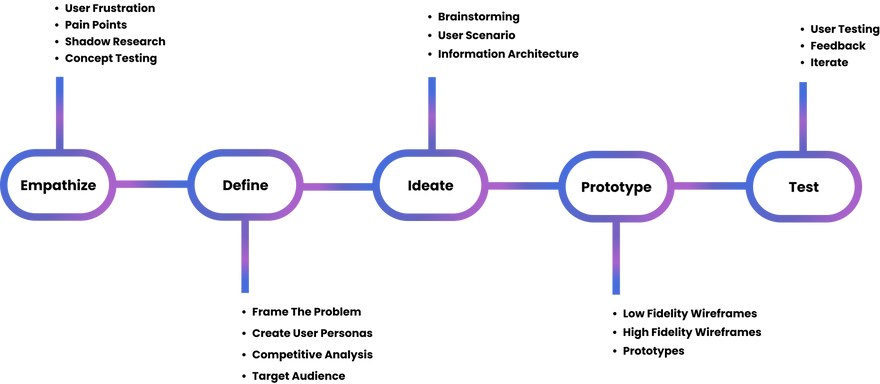
User-Centered Design: Prioritizing user needs through research and testing enhanced the overall user experience.
-
Content Strategy Impact: A well-defined content strategy with clear and concise information improved engagement and understanding.
-
Responsive Design Imperative: The redesign underscored the necessity of ensuring website responsiveness across devices for a seamless user experience.
-
Iterative Design Success: An iterative design approach, incorporating continuous feedback and refinement, resulted in a polished final product.
%202.png)

-
Continuous User Feedback: Establish a post-launch feedback system to adapt to evolving needs and identify areas for improvement.
-
Content Updates: Regularly review and update content to align with MAIA Digital's evolving goals.
-
Advanced Analytics: Use advanced analytics tools for deeper insights into user behavior, optimizing the user experience with data-driven decisions.
-
Accessibility Enhancements: Prioritize inclusivity through regular accessibility audits and improvements.
-
Integration of Emerging Technologies: Stay updated on web technologies, exploring innovative features to enhance the user experience.
-
A/B Testing: Implement A/B testing for key elements, making data-backed decisions for refinements.
-
Scaling for Growth: Ensure the website can scale with MAIA Digital's expansion in traffic, content, and functionality.
-
Regular Security Audits: Conduct routine security audits and updates for user data protection and website integrity.

